A history of the world in 6 glasses - Tom Standage
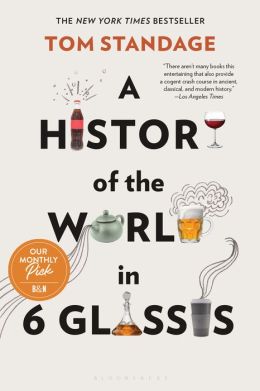
Summary
- A brief history of 6 drinks that had an outsize influence on the history of mankind: beer, wine, distilled spirits, coffee, tea and Coca-cola
How I discovered it
- Quoted in This is your mind on plants - Michael Pollen, and it has a pretty intriguing title.
How the book changed me
- I have a much greater appreciation for beer, wine and spirits...and an appreciation for how tea and coffee have spread over the world, and the influence they have had
Details
- What came first: bread or beer? It seems that they both came from gruel. A think gruel could be baked to be bread, and a thin gruel left to ferment would be beer.
- Around 1000CE the greatest city in the world was Cordoba, and its gift to the world was distillation.
- Tea was safer to drink because the water was boiled, even though they at the time did not understand why, it was credited with improving the health of those who drank it. Furthermore, it contains phenolics which can kill bacteria, making it even safer. It was a convenient water purification technology.
- Coffee is a drink over which to exchange ideas
- The legacy of tea: the indepence of America and the decilne of China. Due to wisespread resentment from the colony America against taxes levied on tea, it led to the Boston tea party and ultimately independence from Britain. And Britain pushed opium on to China that directly led to its decline in order to trade tea.
- Cocacola reflected the rise of USA, capitalism and globalization. Cocacola is the worlds most valuable brand and represents america: freedom of choice, consumerism, democracy. Or on the other hand, greed, ruthless capitalism and taking over local cultures and replacin them with mediocrity.
- the first fizzy drink was established by a man named Nicholas Paul in Switzerland together with Jacob Schweppe in 1797.
- Many carbonated drinks were sold as medicines. There were no laws that time about advertising, so manufacturers were able to make outrageous claims about their products. One medicine, 'the elixir of life', was said to cure "every known ailment. . . . The lame have thrown away crutches and walked after two or three trials of the remedy. . . . Rheumatism, neuralgia, stomach, heart, liver, kidney, blood and skin diseases disappear as by magic."
- One such cure was Lydia E. Pinkham's Vegetable Compound. It was said to be "a positive cure for all those painful Complaints and Weaknesses so common to our best female population. . . . It removes faintness, flatulency, destroys all craving for stimulants, and relieves weakness of the stomach." All were encouraged to write to her for medical advice (even after she died), which of course involved using more of the compound. Later it was found to contain 15-20% alcohol.