Ronald Fisher
Summary
- 1890-1962
- Polymath: mathematician, statician, biologist, geneticist
- He was a genius who laid the groundwork for modern statistical science
Details
- Described as a genius who single handedly created the foundations for modern statistical science.
References
- wikipedia
- How to Win Friends and Influence Fungi - Collected Quirks of Science, Tech, Engineering, and Math from Nerd Nite - Christ Balakrishnan
Quotes
When Ronald Fisher offered his colleague tea that day, he was just being polite. It was the 1920s, in England. What could be chummier than a cup of tea? Fisher had no idea he was about to kick up a big fight—much less revolutionize modern science.
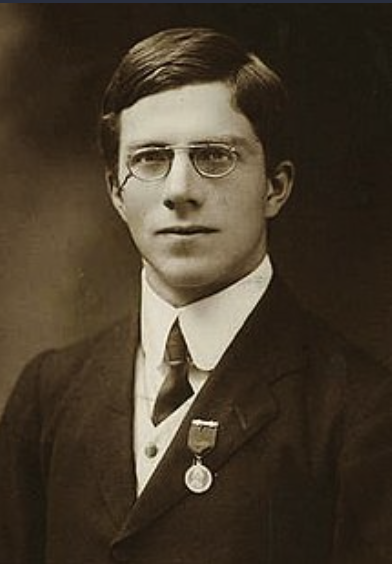
Fisher was a short, slight mathematician with rounded glasses. He worked at an agricultural research station north of London. He’d been hired to help scientists there design better experiments, but he wasn’t making much headway. The station’s tea breaks were a nice distraction.
One afternoon, Fisher offered to make a cup for biologist Muriel Bristol. She said yes, so Fisher poured some milk into a cup and added tea. That’s when the trouble started. Bristol refused the cup. She declared that she never drank tea unless the milk went in second.
Now, this debate about tea—whether to add milk to the cup first, or tea first—has been a bone of contention in England for centuries. Each side has its partisans, who get boiling mad if someone makes a cup the “wrong” way.
But as a man of science, Fisher thought the debate was nonsense. It’s simple thermodynamics. Mixing A with B was the same as mixing B with A. How could adding milk or tea first make any difference? He told Bristol to stop being silly.
But Bristol insisted that the order mattered. She even claimed she could taste the difference between a milk-first cup and a tea-first cup.
Fisher scoffed, claiming that was impossible. So Fisher and Bristol made a bet. He proposed making eight cups of tea, four milk-first and four tea-first. He’d present them to Bristol in random order and let her guess which were which.
Bristol agreed, so Fisher disappeared to make the tea. Upon returning to the room, he found an audience of other scientists gathered. They wanted to see whether Bristol knew her stuff.
Fisher presented the first cup. Bristol sipped and smacked her lips. Then she made her judgment. Milk-first.
Fisher handed her a second cup. Tea-first, she said.
This happened six more times. Tea-first, milk-first, milk-first again. By the eighth cup, Fisher was goggle-eyed. Bristol got every single one correct.
How? Well, it turns out that adding tea to milk is not the same as adding milk to tea, for good old chemistry reasons. Milk contains fats and proteins that are hydrophobic, or water-hating. When those water-hating molecules encounter hot water, they get scalded and change shape, curling up into balls.
That’s important because a change of shape results in a change of flavor. Specifically, the proteins acquire a slight burnt-caramel taste. This is especially likely to happen when you pour milk into hot tea since the first drops of milk get isolated and are therefore more likely to get scalded. In contrast, if you do the opposite and pour tea into milk, the milk drops never get isolated. Little scalding occurs, and there’s little production of off flavors like the burnt-caramel taste.
As for whether milk-first or tea-first tastes better, that depends on your palate. But Bristol’s intuition was correct. The chemistry of milk ensures that milk-first cups and tea-first cups taste distinct.
Overall, Bristol’s triumph was humiliating for Fisher. He was proven wrong in the most public way. But the important part of the incident is what happened next.
After his embarrassment, Fisher wondered whether Bristol had gotten lucky. Maybe she’d just guessed correctly all eight times. Admittedly, this was petulant of him. But he worked out the math for this possibility. And he realized that the odds of her guessing correctly eight times in a row were 1-in-70. Thus, she could probably genuinely taste the difference.
But even then, Fisher couldn’t stop thinking about the experiment. What if she’d gotten just one cup wrong? He reran the numbers and found that the odds of her guessing “only” seven of eight correctly dropped from 1-in-70 to around 1-in-4.
In other words, if she’d missed just one cup, she probably could still taste the difference, but Fisher would have been much less confident. And what intrigued Fisher is that he could quantify exactly how much less confident he’d be. He could put a number on it.Furthermore, that lack of confidence told Fisher something: that the bet’s sample size had been too small. He should have made her try more cups.
So he began running more numbers and found that 12 cups of tea, with six each way, would have been a better experiment. Each individual cup would have carried less weight, so one data point wouldn’t skew things as much.
Before long, other variations on the experiment occurred to him, like using random numbers of tea-first or milk-first cups. He explored these possibilities over the next few months.
Now, this might all sound like a waste of time. It’s just a cup of tea. But the more Fisher thought about it, the more profound this work seemed.
You see, in the 1920s, there was no standard way to design scientific experiments or analyze data. In fact, his agricultural research station hired Fisher to work on those very problems, and again, he hadn’t made much progress. But he realized that the tea test pointed the way. However frivolous it seemed, the simplicity of the test clarified his thinking and allowed him to isolate the key points of good experimental design and good statistical analysis. He could then apply what he’d learned in this simple case to messier, real-world examples—like, say, isolating the effects of fertilizer on crop production. The same general principles would apply to experiments in physics, chemistry, and biology, too.
Fisher published the fruit of his research in two highly influential books, which introduced ideas that scientists still use today, like the null hypothesis, statistical significance, and the danger of small sample sizes. And the first example in the first book—to set the tone for everything that followed—was Muriel Bristol’s tea test. Over the next century, Fisher’s extrapolation from that bet revolutionized modern science, influencing how every lab in the world works today. Not bad for a guy who couldn’t make a proper cup of tea.Sam Kean is a New York Times bestselling author of six books, including The Disappearing Spoon and The Icepick Surgeon.