John Ruskin
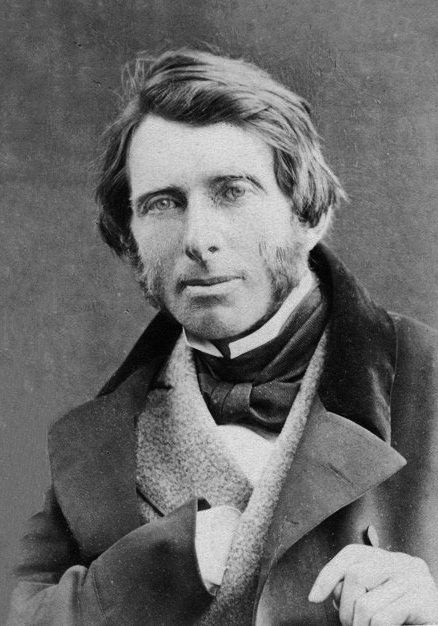
Summary
- 1819-1900
- English Polymath: He was a writer, art critic, draughtsman and philanthropist, covering subjects as diverse as art, architecture, political economy, education, geology, botany, literature and history
Details
- He shunned technology and advocated for buying local.
- he argued that a crafstman is tomake a connection between nature and society, thus being an early environmentalist.
- He also argued for sustainability and ethical consumerism.
References
Quotes
John Ruskin (1819–1900) was the most popular commentator on art and society in his day, and his work inspired a younger generation of thinkers and artists who would become ardent practitioners of his philosophies. Ruskin shunned all technological progress, refusing to ride on trains or accept any goods except those that were produced with handheld tools. He was an early advocate of localism, buying goods and materials from local suppliers, and held beauty in craftsmanship as a moral value. Ruskin believed that good design is linked to good society. He saw the factory worker as enslaved by the rhythm of making many things at a quick pace, leaving him no time to take pride in his skills. Ruskin argued that a role of the craftsman was to illuminate the connections between nature and society, to consider the environment and sustainability. Without their kind of influence, society would corrode and the aesthetic of the country would be ruined. Ruskin had a particular interest in architecture and wrote several influential books on the subject. The first, The Seven Lamps of Architecture, published in 1849, outlined his convictions about what he believed to be the principles of architecture: truth, power, beauty, life, memory, and obedience. He pushed for a gothic aesthetic and emphasized a dedication to God and beauty